What does the modern business and infrastructure landscape in Laos actually look like today?
Having recently returned to Laos on a recent business trip, it was fascinating to see the development of the country post-covid. Here is a country undergoing a quiet yet rapid transformation. Perhaps the most striking representation of this was stepping onto the train in Luang Prabang bound for Vientiane. Having lived in China before coming to Thailand, I can tell you the experience of travelling by train down to Vientiane is exactly the same as boarding a train in Suzhou bound for Shanghai or Beijing. The inextricable ties between Laos and its superpower neighbour are clear for everyone to see right there as I had my bag checked, showed my passport, was greeted with Chinese signage all around me, and boarded a new, pristine train – a living, breathing artifact of Belt and Road infrastructure in action.
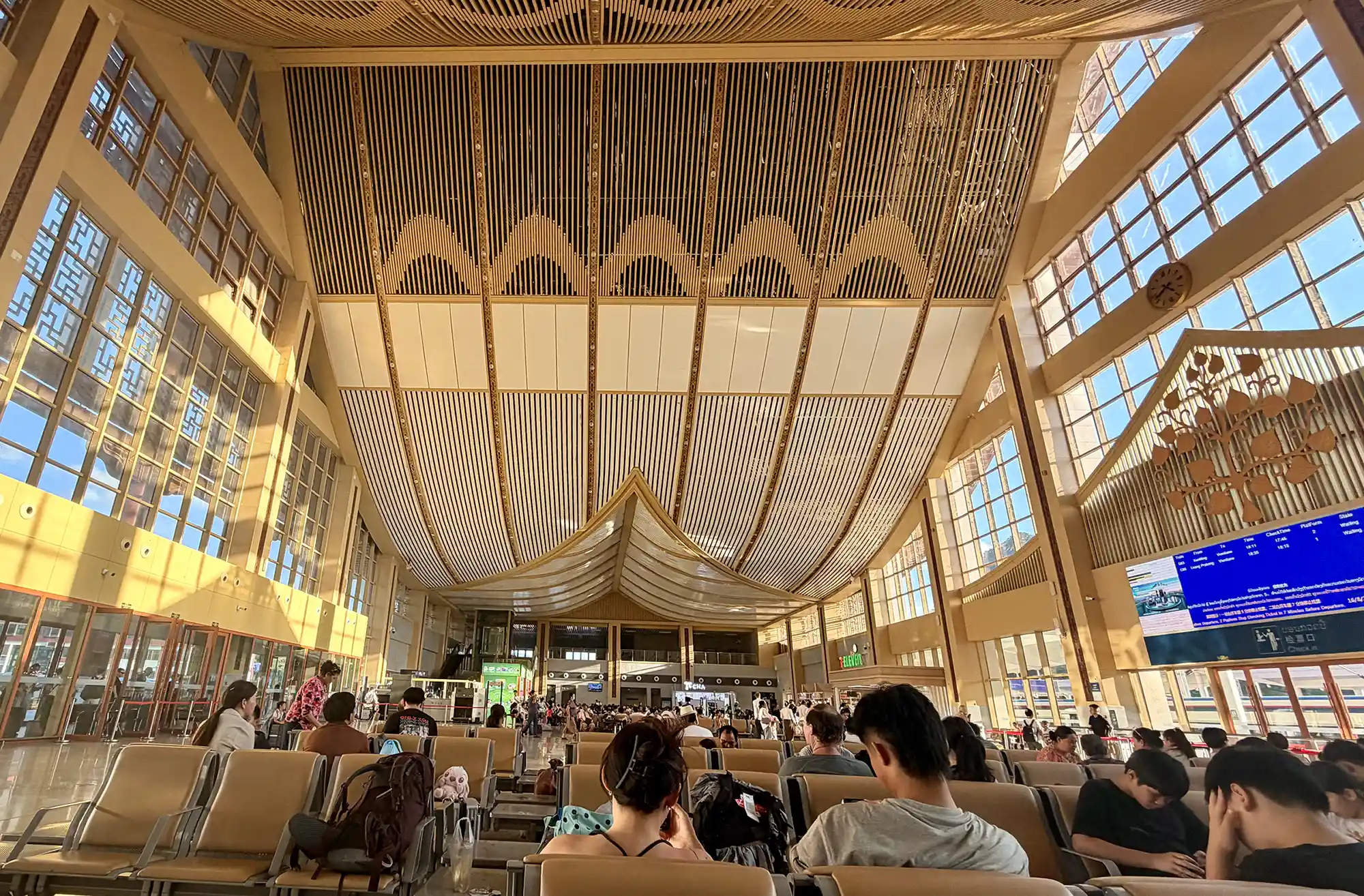
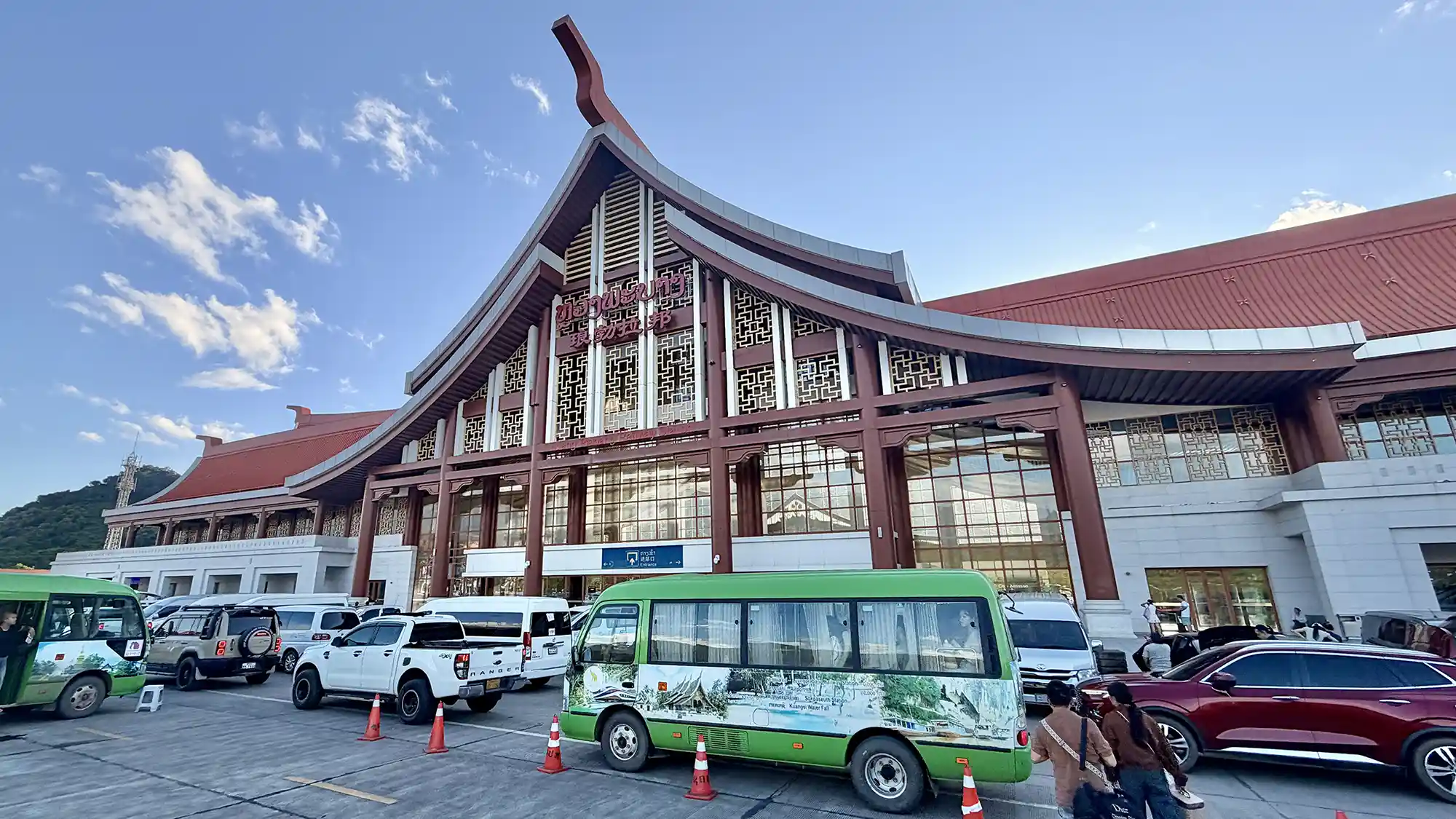
And again, arriving in Vientiane, the sheer scale and architectural stature of the station is another symbol of the fusion between the two nations – so apparent and completely natural, like it has been there for decades. It offers strong evidence that Laos is successfully executing its strategic pivot: recasting itself from a nation seemingly cut off, into a connected, regional crossroads.
What is the economic growth forecast for Laos over the next 3 to 5 years?
International financial institutions and domestic policymakers present a two-tier outlook that balances near-term macroeconomic adjustments with aggressive long-term ambitions:
- Conservative International Outlook: According to the Asian Development Bank (ADB), Lao GDP growth is projected at 4.0% in 2026, picking up to 4.5% in 2027, supported primarily by services, power generation, and regional transport connectivity. Meanwhile, the World Bank maintains a conservative estimate around 3.8% for 2026, citing ongoing public debt servicing obligations, global energy price volatility, and currency pressures.
- Official Government Targets: The Lao government’s 10th National Socio-Economic Development Plan (2026–2030) sets an ambitious target of averaging at least 6.0% annual growth over the next five years. To reach this, official targets project sector expansion led by Services at 7.1%, Industry at 5.7%, and Agriculture at 4.1%, aiming to lift GDP per capita to $3,104 by 2030.
Which foreign investors and commercial sectors are driving growth in Vientiane?
On the streets of Vientiane, regional capital investment is visible in the urban skyline. ICBC’s landmark statement building anchors a growing financial district alongside international banks from Vietnam, Malaysia, and Thailand, as well as established domestic financial brands.
Complementing this financial influx is a growing, multi-cultural expat and founder community from China, South Korea, Japan, Thailand, and Vietnam. This mix is injecting commercial sophistication, complementary service industries, and a rich cultural range into the capital—giving Vientiane a cosmopolitan depth and operational scope that was unimaginable a decade ago.

What are the biggest strategic watch-outs and opportunities for the Lao economy?
As momentum builds, two critical strategic imperatives will likely determine how successfully Laos scales over the coming decade:
- Protecting Natural Capital: Laos must carefully balance development with the preservation of its pristine countryside. Rather than replicating hyper-commoditised mass tourism models seen elsewhere in Southeast Asia, the long-term opportunity lies in high-value, sustainable eco-tourism that protects native natural assets while generating premium yields.
- The Education & Tech Playbook: Borrowing from Vietnam’s playbook, long-term economic independence requires targeted investment in domestic education and technical training. Equipping young Lao talent with digital, engineering, and managerial skills will allow domestic firms to move up the value chain from basic resource extraction to high-margin tech and service solutions.
Why is brand strategy becoming essential for Lao enterprises expanding domestically and cross-border?
With high-speed transit links operational and regional capital flowing in, the domestic market is maturing rapidly. Local enterprises can no longer rely solely on low pricing or regional familiarity as a defense against incoming foreign competitors. As operational costs rise, competing on price creates a margin squeeze; the only sustainable defense is building brand equity that commands a price premium.
Furthermore, ambitious Lao companies in eco-hospitality, agriculture, logistics, and consumer goods are now stepping onto the international stage. Winning the trust of cross-border partners in Thailand, Vietnam, or China requires a world-class narrative that honors local heritage while aligning with global commercial standards.
At LIQUID, our recent work alongside forward-thinking Lao business leaders confirms that the appetite for modern brand architecture is already here. The enterprises that invest in strategic positioning and international brand standards today will be the ones that define the regional marketplace tomorrow.
Sources
Laos Targets 6% Annual Growth Under 2026–2030 Development Plan (KPL)
Lao PDR National Socio-Economic Development Plan Secretariat (rtm.org.la)
Ministry of Planning and Investment Official Website
Lao PDR’s Economic Growth Moderates Amid External Risks (ADB News Release)
Lao PDR: Economy | Asian Development Bank
Asian Development Outlook (ADO) Publication Series (ADB)
Moderate Lao Economic Growth Anticipated in 2026 with Recent Gains Fragile (World Bank Press Release)
Lao People’s Democratic Republic Economic Monitor: June 2026 (World Bank Documents)